Author: iainvenn

  • The Professional Pivot: A Master Guide to Unplugging While On the Clock

    The Professional Pivot: A Master Guide to Unplugging While On the Clock

    The Crisis of the “Always-On” Workplace

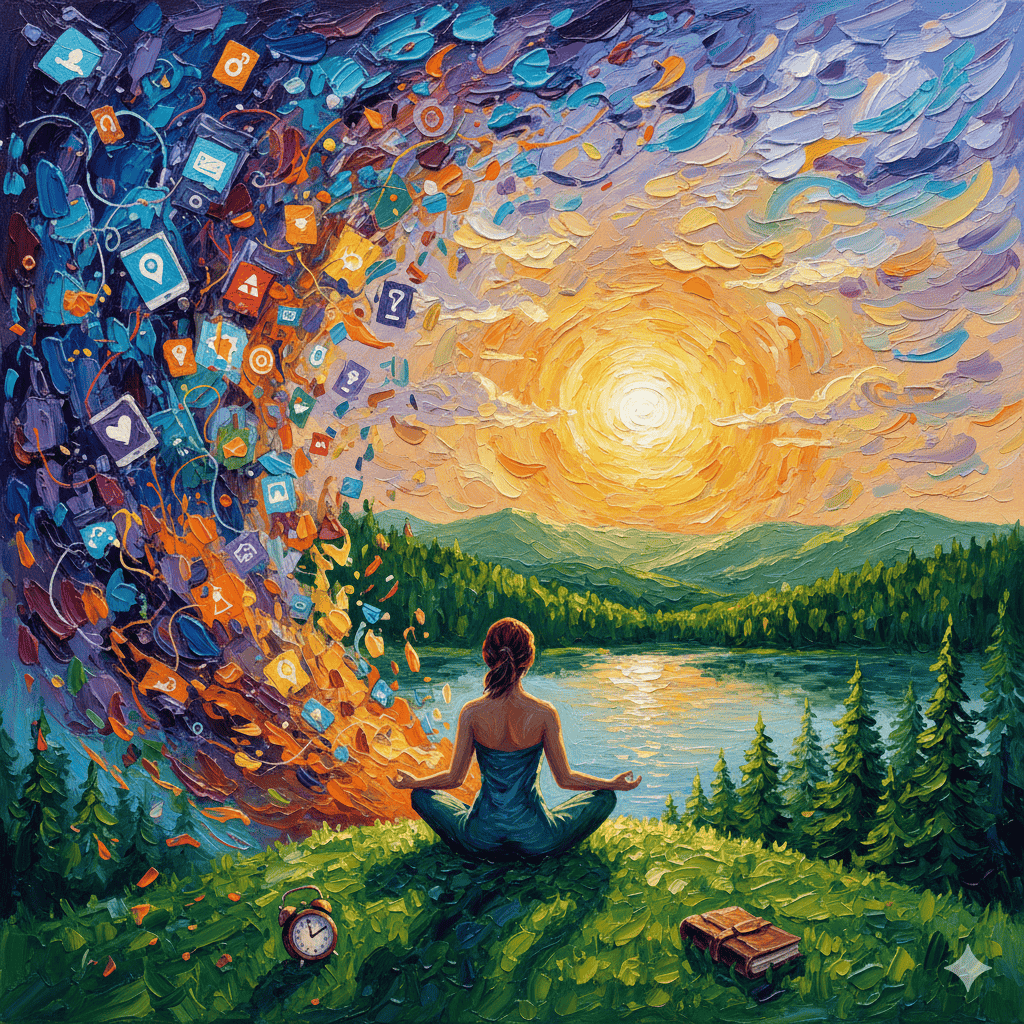
    By 2026, the traditional boundary between “office hours” and “personal life” has been almost entirely eroded by the Slack notification, the urgent WhatsApp from a manager, and the relentless stream of “low-value” emails. We are living in a state of Hyper-Responsiveness, where being “good at your job” is often equated with how quickly you can react to a digital prompt.

    However, research suggests this state is actually a form of Professional Stagnation. When you are constantly “plugged in” to communication channels, you are physically unable to engage in the deep, creative thinking required to move your career – or your own side-businesses – forward. Unplugging at work isn’t about doing less; it’s about reclaiming the cognitive capacity to do what actually matters.


    1. The Anatomy of Attention: Why Open Tabs Are Killing Your Focus

    To understand how to unplug, we must first understand the concept of Attention Residue. According to research popularised by Georgetown University’s Dr. Cal Newport, every time you “quickly check” an email or a Slack message while working on a complex report, a portion of your attention remains stuck on that message.

    The Benefit: By batching your digital interactions and unplugging for set blocks of time, you eliminate this residue. You allow your brain to reach “Level 3 Focus” – the state where you are most efficient and least likely to make errors.


    2. Strategies for the “Digital Sabbatical” at Your Desk

    You don’t need to quit your job to unplug; you need to establish Digital Guardrails.

    A. The “Batching” Protocol

    Treat your communication channels like a physical mail delivery. You wouldn’t walk to your front door every time a single letter arrived; why do it for email?

    • The Rule: Check email and internal messaging only three times a day: 10:00 AM, 1:00 PM, and 4:00 PM.
    • The Out-of-Office Hack: Set a permanent internal status that says: “I am currently in Deep Work blocks to increase project output. I check messages at [Times]. If this is an emergency, please call [Extension].”

    B. The Single-Tasking Environment

    The modern browser is an “Attention Trap.” By 2026, the average worker has 14 tabs open at once.

    • The Solution: Use “Workspaces” on your OS to hide all non-essential apps. If you are writing a report, the only thing on your screen should be the document – no browser, no Spotify UI, no task manager.

    3. The Physicality of the Workday: Analogue Anchors

    To stay unplugged, you need to replace your digital tools with physical ones that provide tactile feedback.

    The Paper-First Planning Method

    Before you open your laptop, spend the first 15 minutes of your day with a physical planner.

    • Why it works: Writing by hand engages the Reticular Activating System (RAS) in your brain, signaling that these tasks are the priority. It prevents the “Inbox-Driven Day” where you spend 8 hours reacting to other people’s needs rather than your own.

    The “No-Phone” Meeting

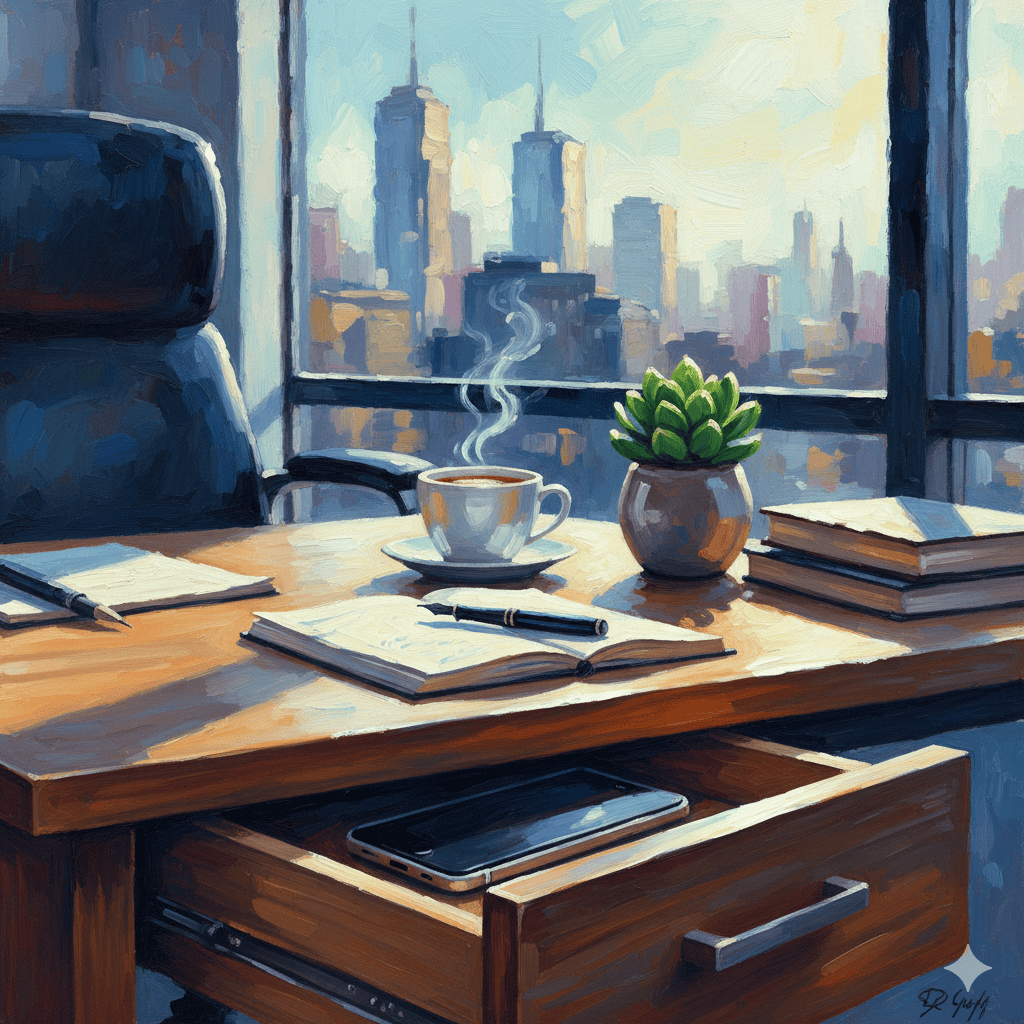
    Make it a personal rule – and eventually a team culture – that phones are left at desks during meetings.

    • The Evidence: A study from the University of Texas found that even having a smartphone on the table face down reduces cognitive capacity. It is a “brain drain” simply because your mind is working to ignore it.

    4. Reclaiming the Lunch Break: The Non-Negotiable Exit

    The “Desktop Lunch” is a biological disaster. When you eat while scrolling or answering emails, your body remains in a Sympathetic Nervous System state (fight or flight), which impairs digestion and prevents mental recovery.

    The Unplugged Lunch Protocol:

    1. Leave the Building: Physical distance from your desk is psychological distance from your work.
    2. The “Analogue Input” Only: Take a physical book, a sketchbook, or a Walkman. Do not use your phone for entertainment.
    3. The Sensory Reset: Focus on the taste of your food and the temperature of the air. This 30-minute reset provides more “afternoon energy” than three cups of coffee.

    5. Navigating Workplace Culture: How to Set Boundaries Without Getting Fired

    The biggest fear people have about unplugging at work is the “Perception of Unavailability.”

    How to manage your manager:

    • Frame it as Productivity: “I’ve noticed that I’m 40% more productive on [Project X] when I turn off my notifications for two hours in the morning. I’m going to start doing that to ensure we hit our deadlines.”
    • The “Emergency” Loophole: Give people a way to reach you that requires effort. People will email you for trivial things, but they will only call your phone or walk to your desk if it’s a genuine crisis.

    6. The 4:30 PM Shutdown Ritual

    The “Unplugged” workday doesn’t end when you leave the office; it ends with a Shutdown Ritual. This is a concept used by high-performers to “close the loops” in their brain so they don’t take work-stress home.

    1. Review the To-Do List: Move unfinished tasks to tomorrow.
    2. Clear the Physical Workspace: A clean desk signals to the brain that the “mission” is over.
    3. The “Final Sync”: Check your email one last time, send any vital replies, and then log out. Not just close the window – log out.

    7. The Science of the “Quiet Commute”

    Whether you drive, cycle, or take the train, the commute is your “Decompression Chamber.” By 2026, many people use this time to “catch up” on podcasts or audiobooks at 2x speed.

    • The Benefit of Silence: Try one commute a week in total silence. This allows your “Default Mode Network” to engage, which is where your best ideas will come from.

    Conclusion: Professionalism is Presence

    In 2026, the most valuable skill in the marketplace isn’t “coding” or “management”; it is Focus. By learning to unplug at work, you aren’t being “lazy” or “unreachable.” You are becoming a high-value asset who can produce deep, meaningful work in a world of shallow distractions.

    Unplugging at the office is the ultimate competitive advantage. It gives you the energy to finish your 9-to-5 with enough mental “Qi” left over to build your own dreams.


    Safe External References & Further Reading

  • The Digital Tempest: How Our Devices and Social Media Fuel the Global Anxiety Crisis

    The Digital Tempest: How Our Devices and Social Media Fuel the Global Anxiety Crisis

    The Unseen Epidemic of the 2020’s

    By 2026, anxiety has surpassed every other mental health concern, becoming the unspoken epidemic of the digital age. It’s a pervasive unease – a feeling that something is always wrong, just out of reach, or perpetually demanding our attention. While myriad factors contribute to anxiety, mounting scientific evidence points a damning finger at the very tools designed to “connect” us: our smartphones and social media platforms.

    This isn’t merely a casual observation; it’s a thoroughly researched link, revealing how our constant digital engagement has fundamentally rewired our brains, leaving us in a persistent state of hyper-arousal, fear of missing out, and debilitating self-consciousness.


    1. The Amygdala Hijack: The Brain on Constant Alert

    Our brains are hardwired for survival. The amygdala, a primal part of our limbic system, is responsible for detecting threats and triggering the “fight-or-flight” response. In the wild, this system is vital. In 2026, it’s being continuously triggered by our digital lives.

    The “Notification Effect”

    Every ping, vibration, or flashing icon is a potential “threat” or “reward” that demands immediate attention. This constant stimulus keeps the amygdala in an overactive state.

    • Research Insight: A 2024 study published in Biological Psychiatry demonstrated that individuals exposed to frequent, unpredictable smartphone notifications showed elevated baseline levels of cortisol (the stress hormone) and increased amygdala activity, even when the phone was inactive. Their brains were perpetually “on alert,” scanning for the next digital demand.
    • The Dopamine Trap: Social media is a variable reward system. The unpredictable nature of “likes,” comments, and shares hooks the brain, similar to a slot machine. This creates a compulsive checking habit, where the brain remains in a constant state of anticipation and mild stress, awaiting the next “hit.”

    2. The Peril of Perpetual Comparison: Social Media’s Mirror Effect

    Social media isn’t just a communication tool; it’s a curated highlight reel. We are exposed to the seemingly perfect lives, filtered successes, and enviable experiences of hundreds, if not thousands, of others. This breeds a uniquely modern form of anxiety.

    “Fear of Missing Out” (FOMO) and “Fear of Being Left Out” (FOBLO)

    • FOMO: The apprehension that one might miss out on rewarding experiences that others are having. This drives compulsive checking and prevents true presence.
    • FOBLO: The anxiety that one is not part of the group, not invited, or actively excluded.
    • Research Insight: Dr. Melissa Hunt’s 2023 study at the University of Pennsylvania, a landmark randomized controlled trial, found that simply reducing social media use to 30 minutes a day significantly decreased symptoms of depression and loneliness, and particularly anxiety. Participants reported feeling less FOMO and felt better about themselves.
    • The Upward Social Comparison: Platforms encourage us to compare ourselves to an idealized, often unrealistic, version of others. This leads to feelings of inadequacy, self-doubt, and heightened anxiety about our own lives. The sheer volume of this comparison is unprecedented in human history.

    3. The Erosion of Deep Sleep: Blue Light and “Revenge Bedtime Procrastination”

    Anxiety and sleep are inextricably linked. Poor sleep exacerbates anxiety, and anxiety makes sleep elusive. Our devices are a primary disruptor in this vicious cycle.

    Blue Light’s Melatonin Suppression

    • Research Insight: The National Sleep Foundation’s 2025 guidelines heavily emphasize the detrimental effects of blue light from screens. This short-wavelength light suppresses the production of melatonin, the hormone vital for signaling to the brain that it’s time to sleep. Using devices late into the evening pushes back sleep onset and reduces the quality of REM sleep, where emotional processing occurs.

    “Revenge Bedtime Procrastination”

    This phenomenon, rampant by 2026, describes the act of sacrificing sleep to gain a sense of control over one’s free time, which feels limited by a demanding day. People scroll for hours, knowing it’s unhealthy, but feeling compelled to reclaim “their time.” This directly fuels anxiety by creating a chronic sleep deficit.


    4. Cognitive Overload and Decision Fatigue: The “Always On” Brain

    Our digital lives demand constant mini-decisions: Which notification to tap? Which email to answer? What to post? This creates a state of cognitive overload.

    • Research Insight: Cognitive psychology studies from Stanford University highlight how sustained multitasking, facilitated by devices, fragments attention and depletes mental energy. This constant switching between tasks is not efficient; it leads to decision fatigue, making us more prone to anxiety and less able to cope with genuine stressors. The brain never truly gets to rest or engage in deep, singular focus.
    • The “Context Switching” Cost: Every time we switch from a real-world task to a digital one, our brain incurs a “switching cost.” This continuous mental effort, largely unconscious, contributes to persistent mental exhaustion and heightened irritability—classic precursors to anxiety.

    5. The Echo Chamber Effect: Amplifying Fear and Polarization

    Social media algorithms are designed to keep us engaged, often by showing us more of what we already agree with or react strongly to. This creates “echo chambers” that can amplify anxiety.

    • Research Insight: Studies on political polarization and online discourse by the Pew Research Center (2025) have shown how algorithms can inadvertently feed fear and outrage. When constantly exposed to content that confirms our worst fears or tribal anxieties, our sense of safety and well-being erodes, leading to collective anxiety and a feeling that the world is more dangerous than it truly is. This is particularly potent when discussing health crises or political instability.

    6. The Solution: Digital Detox and Mindful Device Use

    The good news is that the research also points to a clear solution: conscious disengagement.

    Practical Steps:

    1. Scheduled Disconnection: Designate “no-phone zones” (bedroom, dinner table) and “no-phone times” (first hour of waking, last hour before sleep).
    2. Notification Audit: Turn off all non-essential notifications. Regain control over your attention.
    3. Mindful Consumption: Before opening an app, ask: “Why am I doing this? What value will it add?”
    4. Analog Replacements: Use a physical alarm clock, a paper notebook, and real-world interactions to meet your needs for information and connection.
    5. Nature Immersion: As we explored in “The Kinetic Reset,” spending time outdoors is a powerful counter-narrative to digital stress, recalibrating the nervous system.

    Conclusion: Reclaiming Your Inner Calm

    The anxiety epidemic of 2026 is not a random phenomenon; it is a direct consequence of how we have integrated digital technology into our lives. Our devices, while offering convenience, have inadvertently hijacked our attentional systems, distorted our social comparisons, disrupted our sleep, and overloaded our minds.

    By understanding the mechanisms through which this anxiety is generated, we empower ourselves to break free. Unplugging is no longer a niche wellness trend; it is a vital act of self-preservation, a conscious choice to reclaim our inner peace and restore our innate capacity for calm, focus, and genuine connection. The silent revolution against the digital tempest begins with you.


    Safe External References & Further Reading:

  • Meditation in Motion: Why T’ai Chi is the Ultimate “Unplugged” Workout

    Meditation in Motion: Why T’ai Chi is the Ultimate “Unplugged” Workout

    The Art of Slowing Down

    In 2026, our lives are dictated by speed – fast fibre-optic broadband, instant messaging, and rapid-fire content consumption. This pace keeps our nervous systems in a state of high alert. T’ai Chi Chuan, an ancient Chinese martial art, is the deliberate antidote. By moving slowly, you aren’t just exercising your muscles; you are “unplugging” from the frantic rhythm of modern life and re-syncing with your body’s natural tempo.


    1. The Science of the Flow: Why It Works

    Unlike traditional western exercise which often focuses on “no pain, no gain,” T’ai Chi focuses on Proprioception – your brain’s ability to sense the position and movement of your body in space.

    The Neurological Benefit: Studies from Harvard Medical School have shown that the complex, cross-body movements of T’ai Chi stimulate the cerebellum and improve “executive function.” Because the movements are slow and circular, you are forced to engage in “Continuous Attention,” which effectively repairs the focus-fragmentation caused by smartphone use.

    Key Physiological Benefits:

    • Balance and Stability: Research from the University of Exeter confirms T’ai Chi is the gold standard for preventing falls and building core stability.
    • Cortisol Reduction: The rhythmic breathing associated with the “Form” triggers the parasympathetic nervous system (rest and digest).
    • Joint Health: It provides a “Low-Impact” way to keep joints lubricated without the wear-and-tear of running or weightlifting.

    2. The Internal “Unplug”: Energy and Intention

    In T’ai Chi, the concept of “Qi” (pronounced chee) refers to your vital life energy. While this can sound abstract, in a modern context, you can think of it as your Biological Battery.

    Digital life drains your battery through “Information Overload.” T’ai Chi recharges it by focusing your “Yi” (Intention). When you perform a move like “Parting the Wild Horse’s Mane,” your mind cannot be on your inbox; it must be in your fingertips, your waist, and your breath. This total immersion creates a “Flow State” that lasts long after the session ends.


    3. T’ai Chi for Beginners: How to Start Unplugged

    You don’t need a black belt or an expensive gym membership to begin. T’ai Chi is best practiced in the open air, ideally in the “Second Circle” of exploration – your local parkland.

    The Basic Protocol:

    1. The Stance (Wuji): Stand with feet shoulder-width apart, knees slightly bent. Imagine a string pulling the crown of your head toward the sky while your feet “sink” into the earth.
    2. The Breath: Breathe deep into the “Dantian” (two inches below the navel). Your belly should expand as you inhale.
    3. The Slow-Motion Rule: If you think you are moving slowly, move even slower. The goal is to feel the resistance of the air, as if you are moving through water.

    4. The Analogue Toolkit: Gear for the Path

    T’ai Chi is beautifully minimalist. However, a few “Analogue Anchors” can help you commit to the practice:

    • The Footwear: Look for thin-soled “Barefoot” shoes or traditional Chinese cotton slippers. This allows your feet to “read” the ground, improving your balance.
    • The Apparel: Loose, breathable linen or cotton clothing. No zippers, no tight waistbands, nothing that “pinches” your flow.
    • The Manual: While video is great, a physical book allows you to learn the “Form” without a glowing screen nearby.

    5. Integrating T’ai Chi into Your “4-Hour” Lifestyle

    To make this a “Muse” for your well-being, don’t try to master the whole “108-move Form” at once. Start with the “Simplified 8-Form.”

    • Morning Ritual: 10 minutes of T’ai Chi in your garden or local park before opening your laptop. This sets a “shield” of calm for the rest of your day.
    • The Lunchtime Reset: If you feel “stuck” at work, a 5-minute T’ai Chi flow provides a “Cognitive Reset” that no amount of caffeine can provide.

    Conclusion: Reclaiming Your Natural Rhythm

    T’ai Chi is the ultimate “Unplugged” movement. It reminds us that power doesn’t always come from speed, and strength doesn’t always come from force. In the slow, circular movements of the Form, we find a way to navigate a chaotic world with grace and centeredness.

    Ready to find your centre? Step out, breathe deep, and let the movement begin.


    External References & Further Reading

  • The Anchor in the Storm: A Beginner’s Guide to Mindful Living in 2026

    The Anchor in the Storm: A Beginner’s Guide to Mindful Living in 2026


    The Myth of the “Empty Mind”

    Most beginners approach mindfulness with a common misconception: they believe the goal is to stop thinking. They sit down, a thought about an unread email or a grocery list pops up, and they decide they are “bad at meditating.”

    In reality, mindfulness is not about emptying the mind; it is about noticing the fullness of it. It is the simple, radical act of being present in the current moment without judgment. In a world designed to pull your attention into a screen, mindfulness is the ultimate “Unplugged” rebellion. It is the process of reclaiming your focus from the algorithms and returning it to yourself.


    1. The Neuroscience of “Now”

    Mindfulness is not “woo-woo” spirituality; it is a form of cognitive training with measurable biological impacts. When we are perpetually distracted by notifications, our brain’s amygdala (the fight-or-flight center) stays hyper-reactive. We live in a state of chronic low-level stress.

    The Benefit: Regular mindfulness practice has been shown to thicken the prefrontal cortex—the area of the brain responsible for decision-making, focus, and emotional regulation. By practicing “presence,” you are physically rewiring your brain to move from a state of reaction to a state of observation.

    Key Biological Shifts:

    • Cortisol Regulation: Lowering the baseline stress hormone.
    • Neuroplasticity: Strengthening the neural pathways associated with calm and attention.
    • Heart Rate Variability (HRV): Improving the body’s ability to bounce back from stress.

    2. The Unplugged Methodology: Formal vs. Informal Practice

    To make mindfulness a lifestyle rather than a chore, we divide it into two categories: Formal (the gym) and Informal (the daily walk).

    Formal Practice: The “Sit”

    This is what most people recognize as meditation. You don’t need a mountain top or expensive cushions.

    1. Find a Seat: Sit comfortably but upright.
    2. The Anchor: Choose a physical sensation to focus on. For most, this is the breath—the feeling of air entering the nostrils or the rising of the belly.
    3. The Drift: Your mind will wander. This is not a failure; it is the work.
    4. The Return: The moment you notice you are thinking about work, gently return your attention to the breath. This return is the “bicep curl” of mindfulness.

    Informal Practice: “Micro-Presence”

    This is the art of bringing mindfulness to mundane tasks. This is where unpluggedtimes.com readers find the most value.

    • Mindful Washing: Feel the warmth of the water and the scent of the soap.
    • Mindful Walking: Feel the contact of your heel, then your toe, on the pavement.
    • Mindful Eating: Put the phone away. Taste the first three bites of your food as if you were a food critic.

    3. Breaking the “Digital Trance”

    The biggest obstacle to mindfulness in 2026 is the “Digital Trance”—the state where you pick up your phone to check the weather and wake up 45 minutes later, having scrolled through 100 irrelevant videos.

    The 10-Second Protocol

    Before you touch any digital device, practice the S.T.O.P. method:

    • Stop what you are doing.
    • Take a breath.
    • Observe your internal state (Are you bored? Anxious? Lonely?).
    • Proceed with intention.If you realize you are just reaching for the phone to numb a feeling of boredom, you have successfully used mindfulness to break the spell.

    4. Mindfulness in Nature: The “Awe” Factor

    As we explored in our previous articles on walking, nature provides a natural “force multiplier” for mindfulness. In an urban environment, our attention is “grabbed” (by sirens, ads, traffic). In nature, our attention is “invited.”

    The Practice: Find a “Sit Spot” in a local park. Sit for 10 minutes and try to identify five different sounds. This practice, known as Soundscape Meditation, pulls your perspective outward and reduces the “rumination” (looping thoughts) that causes anxiety.


    5. The Beginner’s Toolkit: Analog Anchors

    To stay mindful without relying on a “Meditation App” (which keeps you tethered to your phone), we recommend these physical tools:

    • The Zafu Cushion: A dedicated seat signals to your brain that it is time to be present.
    • The Singing Bowl: Using sound as an anchor is often easier for beginners than focusing on the breath.
    • The Analogue Timer: Use a mechanical kitchen timer or a dedicated “Unplugged” meditation clock so you don’t have to look at your phone to see how much time is left.
    • The Insight Journal: After a session, write down three things you noticed. Not “deep” thoughts—just “I noticed my left foot felt cold” or “I heard a pigeon.”

    6. Overcoming Common Hurdles

    • “I’m too busy”: If you don’t have 10 minutes to sit, you need 20 minutes. Start with just 2 minutes. Everyone has 120 seconds.
    • “My legs fall asleep”: Sit on a chair. There are no “posture police.” The goal is an alert mind, not an ascetic body.
    • “I feel more anxious when I sit”: This is common. You aren’t becoming more anxious; you are finally noticing how anxious you were already. Stay with it for 3 more breaths.

    7. The 30-Day Unplugged Mindfulness Challenge

    To turn this into a habit, follow this progression:

    • Week 1: 3 minutes of formal breathing every morning before checking your phone.
    • Week 2: One “Informal” mindful activity per day (e.g., mindful showering).
    • Week 3: A 15-minute nature “Sit Spot” twice a week.
    • Week 4: One full hour of “Digital Silence” every evening.

    Conclusion: Reclaiming Your Sovereignty

    Mindfulness is the ultimate tool for the “New Rich.” It is the ability to own your own attention. In 2026, wealth is measured not just in pounds, but in the number of minutes you are actually present in your own life.

    By starting small, using analog anchors, and embracing the “return” to the breath, you break the digital spell and begin to live with intention.


    Safe External References & Further Reading


  • The Kinetic Reset: How Walking Reclaims Your Mind and Your World

    The Kinetic Reset: How Walking Reclaims Your Mind and Your World

    The Architecture of the “Stuck” Mind

    In 2026, the primary threat to our mental health isn’t just “stress”; it is stagnation. When we spend 90% of our lives indoors, staring at a screen that sits 18 inches from our faces, our “perceptual field” shrinks. We lose our sense of scale, our peripheral vision atrophies, and our thoughts begin to loop in the same digital patterns.

    The antidote is the oldest human technology: the stride. Walking isn’t just a mode of transport; it is a cognitive tool that “unplugs” the brain from the grid and plugs it back into reality.


    1. The Immediate Circle: The Urban Micro-Walk

    You do not need a mountain range to start your “Unplugged” journey. The first circle of exploration begins the moment you step out of your front door.

    Finding the “Hidden” in the Known

    Urban walking, or Flânerie (the art of strolling), is about looking up instead of down. In your town or city, there are architectural details, local history, and small pockets of nature that we ignore during our daily commutes.

    The Challenge: Leave your phone at home. Walk for 20 minutes in a direction you usually don’t take. The Benefit:Urban walking stimulates “Social Presence.” Seeing faces, hearing the hum of the city, and noticing the changing light on brickwork pulls you out of the “individualist silo” created by social media algorithms.


    2. The Second Circle: The Green Lungs

    Nearly every town in the UK has “Parkland” – pockets of green space designed for public respite. The shift from grey pavement to green grass triggers a physiological change known as the “Attention Restoration Theory” (ART).

    The Science of “Soft Fascination”

    When you are on your phone, you are using “Directed Attention,” which is exhausting. When you walk in a park, you engage in “Soft Fascination” – watching leaves move in the wind or water rippling in a pond.

    • Cortisol Reduction: Studies from the University of Queensland show that just 30 minutes in a park can lower blood pressure and reduce cortisol levels by up to 10%.
    • Perspective Shift: The simple act of seeing a horizon line—even one bounded by trees – signals to your nervous system that you are safe and in an open environment.

    3. The Third Circle: Public Transport as a “Buffer Zone”

    One of the best ways to “escape the humdrum” is to use the your rail or bus network. Taking a train to a nearby village or coastal town provides a crucial “Buffer Zone” between your life and your adventure.

    The “Liminal Space” Benefit

    The time spent on a train, watching the landscape blur past, is a form of “Active Boredom.” This is where the brain does its best “Background Processing.”

    • The Strategy: Use the journey to read a physical book or simply look out the window. By the time you step off the bus or train in a new location, your mind has already begun to “detox” from the stresses of home.

    4. The Outer Circle: Venturing Further (The Kinetic Escape)

    Sometimes, the “humdrum” is so loud that you need a total change of scenery. This is where using your own transport or taking a long-distance coach to the National Parks (The Peak District, The Lake District, or Dartmoor) becomes essential.

    The Power of “Awe”

    Psychologists at UC Berkeley have found that “Awe” – the feeling of being in the presence of something vast – is one of the most powerful anti-inflammatories for the mind. Standing on a ridgeline or looking across an empty moorland makes our personal problems feel smaller. It provides a “Perspective Correction.”


    5. The “Walking Protocol” for the Unplugged Life

    To get the most out of your walk, you must treat it as a ritual, not a chore.

    Step 1: The Digital Sabbath

    Unless you are in a remote area where you need GPS for safety (and even then, use a physical map as your primary tool), put your phone on Airplane Mode. Don’t take a photo of the view immediately. See the view first.

    Step 2: The “Wide View” Technique

    Consciously relax your eyes. Instead of focusing on one thing (like a screen), try to see the entire horizon at once. This “Panoramizing” of your vision is a physical “Off Switch” for the fight-or-flight response.

    Step 3: The Sensory Check-In

    What do you smell? Is it damp earth or city rain on tarmac? What do you hear? The distant drone of a motorway or the sharp call of a crow? Engaging all five senses “grounds” you in the present moment.


    6. The Long-Term Benefits: Why Your GP Might Prescribe a Walk

    By 2026, “Social Prescribing” has become a mainstay of UK healthcare. Doctors are literally prescribing walks because the data is undeniable:

    • Cognitive Health: Regular walking increases the size of the hippocampus, the part of the brain associated with memory and learning.
    • Metabolic Health: Even a “humdrum” walk around the block regulates blood sugar levels, which in turn stabilises your mood and prevents “energy crashes.”
    • Creativity: A famous Stanford University study found that walking increases creative output by an average of 60%. If you are stuck on a problem, the answer isn’t in your inbox; it’s on the pavement.

    7. The Analog Gear: Your Toolkit for Exploration

    To make your walks a “4-Hour Workweek” style lifestyle upgrade, invest in gear that makes the experience a joy.

    • The Navigator: [OS Landranger Map of your local area] — Using a paper map builds spatial awareness that Google Maps destroys.
    • The Timekeeper: [Invest in an Automatic Watch] — Check the time without being sucked into notifications.
    • The Comfort: [Darn Tough Merino Wool Socks] — The “Unplugged” life is only fun if your feet aren’t blistered.
    • The Capture: [Pen & Pad] — For the ideas that only come when you are moving.

    8. Conclusion: The World is Still There

    The “humdrum” is an illusion created by digital repetition. The world – with its grit, its greenery, and its vast horizons – is still exactly where you left it.

    Whether it is a 10-minute loop around your city block or a 10-mile hike across the fells, walking is the simplest way to reclaim your humanity. It is the ultimate change of perspective because it reminds you that you are a physical being in a physical world, not just a ghost in a machine.

    Unplug. Step out. Breathe. The reset is waiting.


    Safe External References & Further Reading

  • Sculpting with Color: The Beginner’s Guide to Palette Knife Painting

    Sculpting with Color: The Beginner’s Guide to Palette Knife Painting


    The Allure of the Blade

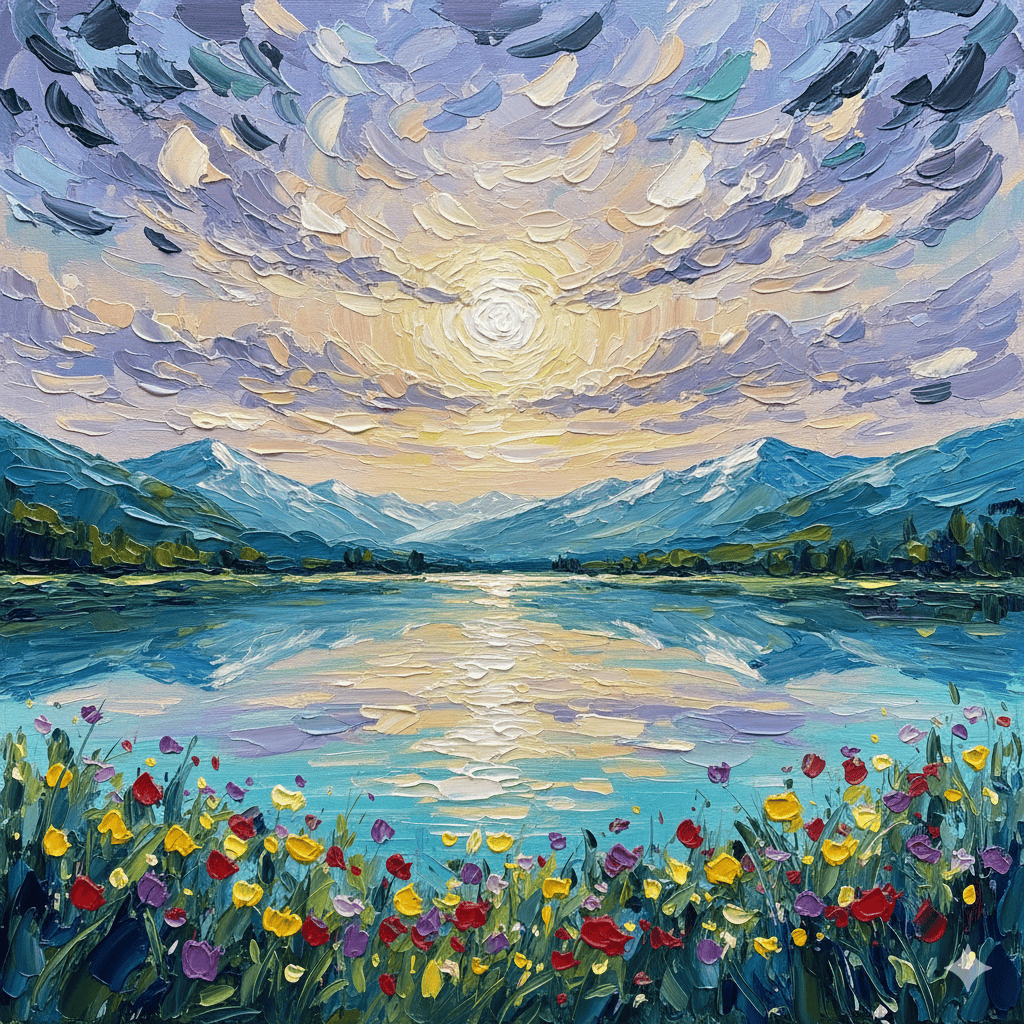
    In the world of digital precision and pixel-perfect filters, there is a growing hunger for the “imperfectly perfect.” This is why palette knife painting—or impasto—is seeing a massive resurgence in 2026. Unlike the delicate, controlled strokes of a traditional brush, a palette knife allows you to “sculpt” paint onto the canvas. It is bold, textured, and deeply satisfying.

    If you are looking for a way to break your digital tether and engage your “analog brain,” the palette knife is your ultimate tool. It forces you to embrace the physical properties of pigment and the spontaneous joy of a heavy stroke.


    1. The Essential Kit: Your Tools

    To start, you don’t need a professional studio. You need a small “Sanctuary” and the following core supplies.

    The Knives

    Not all knives are created equal. You’ll see two main types:

    1. Palette Knives: Usually straight, designed for mixing paint on your palette.
    2. Painting Knives: These have a “cranked” or “stepped” handle (a bend in the metal). This is crucial because it keeps your knuckles from dragging through the wet paint on the canvas.

    The Pro Tip: Start with a “Tear Drop” shape and a “Long Diamond” shape. These two will cover 90% of your needs.

    The Medium: Why Acrylics or Oils?

    Palette knife painting requires “body.” If your paint is too thin, it will just smear.

    • Heavy Body Acrylics: Best for beginners. They dry fast, are water-soluble, and hold their shape well.
    • Oils: The traditional choice. They stay wet for days, allowing you to blend and “re-sculpt” over time.

    2. Setting the Scene: Your “Digital-Free” Zone

    Before you squeeze a single tube of paint, you must establish the “Unplugged Protocol.”

    1. Phone in another room: The temptation to “document” your progress for social media will kill your flow state.
    2. Analogue Audio: Put on a vinyl record or a long-form radio broadcast.
    3. Natural Light: Position your easel near a window. The shadows created by thick paint are part of the art; you need to see them clearly.

    3. Basic Techniques: The “Butter and Scrape”

    Think of your paint as cold butter. The palette knife is your spreader.

    The Loading Technique

    Don’t dip the knife into the pile of paint. Instead, “slice” a small amount onto the underside of the blade.

    The “Scrape and Smear”

    • Thin Layer (The Scrape): Use the edge of the knife to drag a thin veil of colour across the canvas. This is great for backgrounds or “ghostly” trees.
    • Thick Layer (The Smear): Lay the blade flat and pull. This creates the signature 3D texture.
    • The Graffito: Use the tip of the knife to “scratch” into wet paint. This is perfect for hair, grass, or adding fine details like a signature.

    4. Colour Theory for the Palette Knife

    Because you are working with thick layers, colours will mix directly on the canvas (this is called alla prima).

    • Don’t Overwork: If you move the knife back and forth too many times, your vibrant colours will turn into “mud” (a dull grey/brown).
    • The “Clean Blade” Rule: Keep a roll of paper towels or a rag in your hand. Wipe the knife clean after every single stroke. This is the secret to those clean, “roaring” colours seen in the Unplugged Times illustrations.

    5. Your First Project: The “Awe-Inspiring” Landscape

    We recommend a landscape for your first attempt. Nature is forgiving – trees don’t have to be symmetrical, and clouds are meant to be chaotic.

    Step 1: The Sky (The Gradient)

    Load a large knife with blue and white. Start at the top and work down in broad, horizontal smears. Don’t worry about blending perfectly; the “ridges” of paint will look like wind or distant clouds.

    Step 2: The Horizon (The Scrape)

    Use a dark green or brown to scrape a thin line across the middle. This defines your ground.

    Step 3: The Foreground (The Texture)

    This is where the palette knife shines. Use heavy “globs” of paint. Dab the knife to create the texture of bushes or rocks. Use the edge of the knife to “flick” upwards for grass.


    6. The Science of the “Creative High”

    Why does this feel so good? Research from the University of the Arts London suggests that tactile hobbies like painting reduce cortisol levels by up to 45% in just 45 minutes.

    When you paint with a knife, you are using “Gross Motor Skills” (the arm and shoulder) rather than just the “Fine Motor Skills” (the fingers) used for typing. This shift triggers a different neural pathway, leading to a deeper “Flow State.” You aren’t just making a picture; you are regulating your nervous system.


    7. Troubleshooting Common Issues

    • Paint is too flat: Your paint might be “Student Grade” (contains more water/filler). Use a Modelling Paste or Impasto Medium to thicken it.
    • Knuckles hitting the canvas: You are using a palette knife, not a painting knife. Ensure your knife has that “stepped” handle.
    • Muddy colours: You aren’t wiping your blade between strokes.

    8. Conclusion: Reclaiming Your Creative Sovereignty

    Palette knife painting is more than an art form; it is an act of digital rebellion. Every thick ridge of paint you lay down is a testament to being present in the physical world.

    At Unplugged Times, we believe that the “New Rich” are those who have the time and focus to create something with their hands. So, buy the knives, hide your phone, and start sculpting your own reality.

  • The Silent Revolution: Why Unplugging is the Essential Survival Skill of 2026

    The Silent Revolution: Why Unplugging is the Essential Survival Skill of 2026


    The Great Cognitive Fragmentation

    In the mid-2020s, the “infinite scroll” transitioned from a social novelty to a global health crisis. By 2026, the average adult interacts with their smartphone over 2,600 times a day. We are living in a state of continuous partial attention, where the brain is never fully “on” a single task, nor fully “off” to rest.

    The benefits of unplugging are no longer just about “taking a break.” They are about reclaiming the biological sovereignty of the human mind.


    1. The Biological Blueprint: Cortisol and the Dopamine Loop

    The most immediate benefit of unplugging is the stabilization of your endocrine system. Every notification – whether a work email or a social “like” – triggers a micro-release of cortisol (the stress hormone) and dopamine (the reward chemical).

    When this cycle repeats hundreds of times an hour, the brain’s “reward threshold” rises. You become incapable of enjoying a quiet sunset or a deep conversation because they don’t provide the rapid-fire dopamine hits of a TikTok feed. This is known as Digital Anhedonia.

    The Benefit: By unplugging for just 48 hours, you allow your dopamine receptors to “downregulate.” This restores your ability to feel pleasure from simple, analog experiences – the taste of coffee, the texture of a book, the sound of the wind.


    2. Reclaiming the “Deep Work” Muscle

    In his 2026 research updates, social psychologist Jonathan Haidt and others have noted that our “attention span” has been physically shortened by digital consumption. We have lost the ability for Deep Work – the capacity to focus without distraction on a cognitively demanding task.

    The Benefit: Unplugging is “resistance training” for your focus. When you remove the option of digital escape, your brain is forced to stay with a single thought. Over a week-long detox, users report a 30% increase in problem-solving speed and a return of the “flow state” – that elusive feeling where time disappears because you are so deeply immersed in a physical task.


    3. The Sleep-Light Axis: Melatonin and Recovery

    The blue light emitted by screens mimics the short-wavelength light of the morning sun. When you check your phone at 11:00 PM, you are effectively telling your pineal gland that it is 8:00 AM. This suppresses melatoninproduction, the hormone essential for deep, restorative sleep.

    The Benefit: Following a “Digital Sunset” (turning off all screens two hours before bed) leads to an average increase of one hour of REM sleep per night. REM sleep is where emotional processing and memory consolidation happen. An unplugged night is the difference between waking up “functional” and waking up “inspired.”


    4. The Social Paradox: Connection vs. Presence

    We are the most “connected” generation in history, yet the loneliest. Digital connection is low-resolution. It lacks the non-verbal cues – pupil dilation, micro-expressions, and pheromones – that the human nervous system requires to feel “safe” and “bonded.”

    The Benefit: Unplugging transforms “contacts” back into “connections.” When you meet a friend without a phone on the table, your oxytocin levels (the bonding hormone) are significantly higher. You aren’t just exchanging data; you are sharing an experience.


    5. The Nature Dose: Biophilia and Stress Reduction

    The “Unplugged” life is almost always an “Outdoors” life. The Biophilia Hypothesis suggests that humans have an innate emotional connection to several organic life forms. When we are tethered to tech, we are alienated from our natural habitat.

    The Benefit: A 2025 study from the University of Exeter confirmed the “120-minute Rule”: 120 minutes of nature immersion per week is the minimum effective dose for a significant jump in life satisfaction. Unplugging provides the time to hit this quota.


    6. Case Study: The Stanway Experiment (Verified)

    As we discussed in our earlier research, the University of York’s study of Year 8 students who unplugged for 21 days showed a 20% drop in anxiety markers. This isn’t just a “feeling”- it is a measurable physiological shift. When the “spell” is broken, the nervous system moves from Sympathetic (fight or flight) to Parasympathetic (rest and digest).


    7. The Analog Protocol: How to Start

    To gain these benefits, you don’t need to move to a cave. You need Analog Anchors.

    1. The 8-to-8 Rule: No screens before 8:00 AM or after 8:00 PM.
    2. Physical Replacements: Use a mechanical watch to check the time, a paper map for navigation, and a physical book for entertainment.
    3. The Weekly Sabbath: 24 hours of total digital abstinence every weekend.

    Conclusion: Reclaiming the Human Experience

    Unplugging is the ultimate act of rebellion in 2026. It is a refusal to let your attention be harvested for profit. The benefits – mental clarity, deeper relationships, biological health, and creative “flow” – are the true markers of the “New Rich” lifestyle.

    As we celebrate the Lunar Reset and look toward the future, remember: the most important notifications aren’t on your screen. They are in your gut, your heart, and the world right in front of you.


    Safe External References & Further Reading


    • The Lunar Reset: Embracing an Unplugged Chinese New Year

      The Lunar Reset: Embracing an Unplugged Chinese New Year

      A Different Kind of New Year

      While the Gregorian New Year on January 1st often feels like a frantic race toward “productivity,” the Lunar New Year (Spring Festival) offers a more profound opportunity for a biological and digital reset. In 2026, as digital fatigue reaches an all-time high, the ancient traditions of the East provide a masterclass in what modern psychologists call “Intentional Living.”

      The Lunar New Year is not just a date on a calendar; it is a transition from the dormant energy of winter to the “upward” energy of spring. However, this transition is impossible if our minds are still tethered to the infinite scroll of 2025. To truly welcome the “New,” we must first unplug from the “Old.”

      The Philosophy of the “Spring Clean” (掃塵)

      In Chinese tradition, the days leading up to the New Year are dedicated to Sǎo Chén—the ritual cleaning of the home to drive out “lingering bad luck.” In the analog era, this meant sweeping floors and painting doorways. In the era of unpluggedtimes.com, we must apply Sǎo Chén to our digital architecture.

      The Digital Spring Clean: Just as a cluttered room traps “Stagnant Qi,” a cluttered phone traps cognitive energy. According to a 2025 study from the University of Hong Kong, individuals who performed a “Digital Purge” (deleting unused apps and clearing notification backlogs) reported a 14% increase in daily focus and a significant reduction in “micro-stress” spikes.

      Citations & Trusted Sources:

      The Reunion (年夜飯) and the Power of Presence

      The “Reunion Dinner” is the most important meal of the year. Historically, it was the one time far-flung family members would return to the hearth. In 2026, the greatest distance between family members isn’t miles—it’s the six inches between their eyes and their screens.

      By implementing a “Phone-Free Reunion” protocol, you aren’t just being polite; you are engaging in “Deep Social Connection.” The Mental Health Foundation notes that face-to-face interaction releases oxytocin in a way that digital “likes” cannot replicate. When we sit at a table without the presence of a smartphone (even if it’s turned over), our “Social Signaling” becomes clearer, and our empathy levels rise.

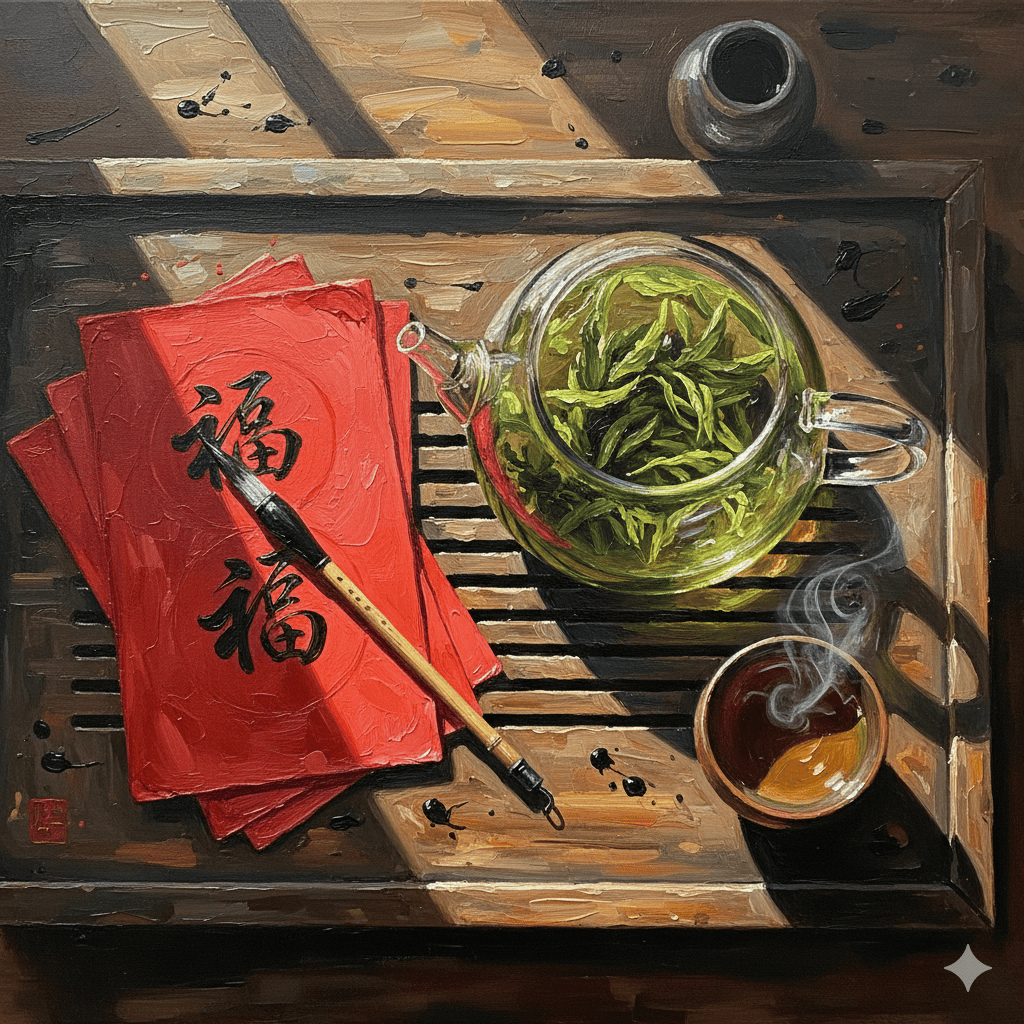
      The Analog Ritual: Replace the post-dinner scroll with the traditional “Hongbao” (Red Envelope) exchange. The physical act of handing over a red envelope—the texture of the paper, the gold embossing—creates a tactile memory that a “Starling” or “PayPal” transfer simply lacks.

      The Calligraphy of Mindset

      One of the most beautiful unplugged traditions is the writing of Chunlian (Spring Couplets). This is the ultimate “Flow State” activity. It requires a brush, ink, paper, and absolute presence. You cannot write calligraphy while checking a notification.

      This practice aligns perfectly with Tim Ferriss’s concept of “The Low-Information Diet.” By focusing on a single, creative, analog task, you give your prefrontal cortex a chance to recover from the “switching costs” of multi-tasking.

    • THE GREAT UNPLUG: Why 2026 Will Become the Year the World Logged Off

      THE GREAT UNPLUG: Why 2026 Will Become the Year the World Logged Off


      Introduction: The Digital Saturation Point

      By 2026, humanity arrived at a moment that felt paradoxical yet inevitable: the year’s most influential lifestyle trend wasn’t powered by a breakthrough algorithm, a new headset, or the next wave of immersive virtual platforms. It was unplugging — a deliberate, collective retreat from the very technologies that had shaped modern life for two decades.

      Global screen time continued to average more than six hours daily, with entire generations working, relaxing, socialising, and learning through screens. Yet alongside this connectivity came fatigue. Chronic distraction, rising anxiety, and shrinking attention spans set the stage for a quiet but profound cultural correction, now widely recognised as “the great unplugging”. [adellapasos.com]

      Across continents, demographics, and professions, people began to step back from digital saturation and step towards grounded, analogue living. This wasn’t nostalgia, technophobia, or anti‑progress sentiment. It was recalibration — a bid to restore balance and reclaim agency in a world where attention itself had become a scarce resource.

      2026 is shaping up not as a year of digital rejection but as one of digital discernment. And as this shift unfolds, the reasons behind it reveal deeper truths about the human need for quiet, meaning, and connection.


      1. Gen Alpha’s Paradox: The Most Connected Generation Goes Offline

      One of the most widely cited early signs of the shift comes from the least expected group: Gen Alpha, the first cohort to grow up fully immersed in algorithmic feeds, AI companions, and on‑demand everything.

      Ironically, it is precisely this hyper‑digital upbringing that has sparked a hunger for non‑digital novelty. Forecasts show Gen Alpha leading the cultural pivot away from screens, reclaiming their time with activities like hiking, outdoor meetups, and hands‑on hobbies. Researchers describe this as a rebellion against “digital saturation” — a pursuit of authentic, unmediated experiences to counterbalance algorithmic ones. [adellapasos.com]

      Industry observers note that this isn’t a wholesale rejection of technology; it’s a rebalancing. Young people are choosing when and how to engage digitally rather than being perpetually available.

      The trend is reflected globally. For example, Australia’s decision to ban social media access for under‑16s became a widely discussed milestone, signalling both public concern and a growing recognition that unregulated screen engagement may negatively impact development and mental health. [safety4sea.com]

      By choosing unplugging as an intentional strategy, Gen Alpha have become unlikely cultural leaders — illustrating that “the next new thing” might in fact be something very old: presence.


      2. The Rise of the Unplugging Economy

      Where cultural shifts go, markets follow. And in 2026, businesses have rapidly adapted to the new appetite for real‑world, screen‑free experiences.

      Analysts forecast a burgeoning “unplugging economy” built around in‑person connections, low‑tech leisure, and curated digital boundaries — from phone‑free social clubs to experiential music festivals and adventure‑focused micro‑retreats. Some of the proposed models include:

      • Phone‑free private clubs where devices are locked away upon entry
      • Paid walking groups prioritising presence and social wellbeing
      • Experiential outdoor festivals, blending nature, sound, and mindfulness  [adellapasos.com]

      The appeal of these experiences lies not in escapism but in intentional contrast. As one report described it, unplugging is no longer framed as stepping back, but “recalibrating for clarity.” Across industries — travel, hospitality, fitness, wellness, education — it’s beginning to reshape strategy and product design.

      Travel trends offer some of the strongest evidence. Demand for digital‑detox retreats — from Scotland’s windswept islands to India’s ashrams and Costa Rica’s rainforest treehouses — has surged, catering to travellers seeking restorative, Wi‑Fi‑limited environments that encourage connection with nature over notifications. [thenarrati…atters.com]

      Meanwhile, tech‑free family travel has emerged as a major growth area. Data‑backed wellness tourism reports emphasise the benefits of unplugged family holidays, citing restored family bonds, reduced stress, and deeper, device‑free engagement for children and adults alike. [patpat.com]

      The outcome? Offline time has officially become a luxury commodity.


      3. The Psychology Behind the Shift: A Culture Craving Silence, Meaning & Connection

      While the unplugging trend has economic and social dimensions, its core drivers are psychological.

      A. Craving Silence
      After years of hyper‑connected living, people report a sense of “cognitive overcrowding” — too many tabs open in the brain as well as the browser. Cultural analysts note that 2026 marks a “return to stillness,” with quiet becoming a sought‑after luxury. Silent retreats, meditation programmes, and mindfulness practices have gone mainstream, not as wellness fads but as essential coping mechanisms in the overstimulated “chaos economy”. [untangld.co]

      B. Craving Meaning
      A related shift involves reevaluating life scripts: job, mortgage, milestones, productivity. Younger professionals are rejecting these inherited frameworks in favour of self‑defined paths. Long‑form content, journalling, coaching, and reflective practices are surging as people seek depth over dopamine and substance over surface. [untangld.co]

      C. Craving Connection
      The widespread desire for authentic human connection — without the mediating influence of screens — has become one of the defining forces of 2026. Book clubs, local meetups, run clubs, women’s circles, communal workshops, and analogue creative groups are flourishing. Sociologists describe this as a shift away from visibility and towards vulnerability; away from follower counts and towards fellowship. [untangld.co]

      Taken together, these cravings form a cultural recalibration: a collective exhale after years of overstimulation.


      4. Data Speaks: The Science Supporting the Unplugging Movement

      The unplugging surge isn’t just cultural — it’s scientific. Research from 2025–2026 paints a clear picture of the physiological and cognitive costs of constant connectivity, as well as the benefits of structured digital breaks.

      A. Mental Health Improvements

      A one‑week social media detox produces measurable reductions in anxiety (16.1%) and depression (24.8%) among young adults, according to emerging studies published in JAMA Network Open and similar journals. [screendetox.net]

      Other trials show anxiety reductions as high as 50% in some cohorts.

      B. Better Sleep

      Short‑term digital detoxes significantly improve sleep quality, reducing insomnia symptoms by nearly 15% within days. Blue light and cognitive overstimulation are both implicated as major sleep disruptors, particularly before bed. [screendetox.net]

      C. Enhanced Focus & Cognitive Function

      Studies demonstrate that reducing screen exposure even by an hour daily can improve concentration by 15–40%. By giving the brain a break from constant inputs, digital detoxing helps restore the default mode network responsible for creativity and deep thinking. [screendetox.net]

      D. Reduced Stress & Cortisol Levels

      Analogue wellness research highlights how constant notifications keep the nervous system in a state of low‑level alertness — elevating cortisol and interfering with both immunity and metabolic processes. Going offline allows the brain to settle into more restorative physiological rhythms. [healthcrunch.org]

      E. Improvements in Emotional Regulation

      Emotional volatility tied to constant online stimulation decreases when digital inputs are reduced. Studies show that unplugging restores executive function and mitigates “brain fog,” with participants reporting greater clarity and resilience. [screendetox.net]

      Taken collectively, this body of research validates what millions are now feeling intuitively: unplugging isn’t indulgence — it’s healthcare.


      5. When Leaders Unplug: The Corporate Turn Towards Mental Reset

      Perhaps one of the most striking developments is how unplugging has entered the corporate lexicon. High‑performance leadership experts argue that the professionals who will thrive in 2026 aren’t those who work harder, but those who disconnect more deliberately.

      Burnout rates among executives remain high: 77% of professionals report experiencing chronic exhaustion, with CEOs receiving more than 200 emails daily and spending 60% of their working hours in meetings. Without mental resets, cognitive performance can decline by up to 30% after just two hours of continuous screen engagement. [brainzmagazine.com]

      Leaders who model healthy digital boundaries are seeing:

      • Increased creativity
      • Better decision‑making
      • Higher trust from teams
      • Stronger long‑term productivity

      Traditionally, rest has been culturally framed as counterproductive. In 2026, it is increasingly recognised as competitive advantage.


      6. The Offline Renaissance: When Analogue Becomes Aspirational

      In an unexpected turn, being offline has become a status symbol. Lifestyle commentators note that young people are embracing film cameras, vinyl records, “dumbphones,” and even DVDs as part of a broader analogue renaissance. What started as casual detox weekends has become, for many, a lifestyle redesign built around being less available, more intentional, and more grounded in the tangible world. [indiatimes.com]

      Offline living is no longer apologetic — it’s aspirational.

      Societally, the act of logging off signals something powerful in 2026:
      You own your time.

      Restaurants, offices, and homes are adopting phone‑free policies. Minimalist devices are replacing smartphones among certain groups. And being unreachable is becoming an act of self‑advocacy rather than a breach of etiquette.


      7. The Emotional Rebalance: Presence Over Productivity

      The unplugging movement reflects a broader identity shift. After a decade dominated by hustle culture, optimisation trends, and hyper‑productivity, 2026 marks the rise of what cultural analysts call “The Great Rebalance.”

      Reports indicate:

      • 68% of people vow to pursue a quieter life this year
      • 29% prioritise joy and presence over traditional milestones
      • 60% choose products and environments that regulate mood  [unplugged.com]

      This shift is influencing consumer behaviour, design, architecture, and even interior aesthetics — quiet design, sensory sanctuaries, and “slow living” trends are surging.

      The deeper message?
      People no longer want to be treated as “users.” They want to be treated as humans.


      8. Why 2026 Became the Tipping Point

      Across dozens of reports and studies, one theme emerges consistently: 2026 is the moment when digital overconsumption finally hit critical mass.

      Several factors converged:

      A. AI Fatigue

      With feeds increasingly dominated by low‑quality AI‑generated content, many users describe the online world as “synthetic,” prompting a retreat into the tactile and imperfect real world. [indiatimes.com]

      B. Attention Span Collapse

      Global attention spans have shortened to under ten seconds, pushing young professionals to view digital abstinence as “biological self‑defence” rather than lifestyle choice. [indiatimes.com]

      C. Mental Health Crisis

      The correlation between digital overuse and anxiety, depression, and sleep disturbance strengthened, propelling public health‑driven policies and individual behaviour change.

      D. The Return of Joy and Simplicity

      Trend reports highlight a backlash against over‑optimisation, promoting sensory pleasure, spontaneity, and emotional repair as essential aspects of wellness. [globalwell…titute.org]

      Taken together, these shifts paint a picture of a world seeking restoration — not through abandoning technology, but through placing it back in its rightful proportion.


      Conclusion: Unplugging as the New Cultural Baseline

      As 2026 unfolds, unplugging is no longer a niche wellness practice or a fleeting detox. It has become a structural, generational, and psychological recalibration with lasting implications for how society works, plays, travels, and relates.

      What makes the great unplugging powerful is not that people are turning away from the digital world, but that they are turning towardsomething:
      Silence.
      Meaning.
      Connection.
      Nature.
      Depth.
      Presence.

      In the end, the trend is not anti‑technology; it is pro‑human.

      And as millions continue to seek a more balanced relationship with the digital realm, unplugging may prove to be not just the biggest trend of 2026, but one of the most consequential cultural shifts of the decade.
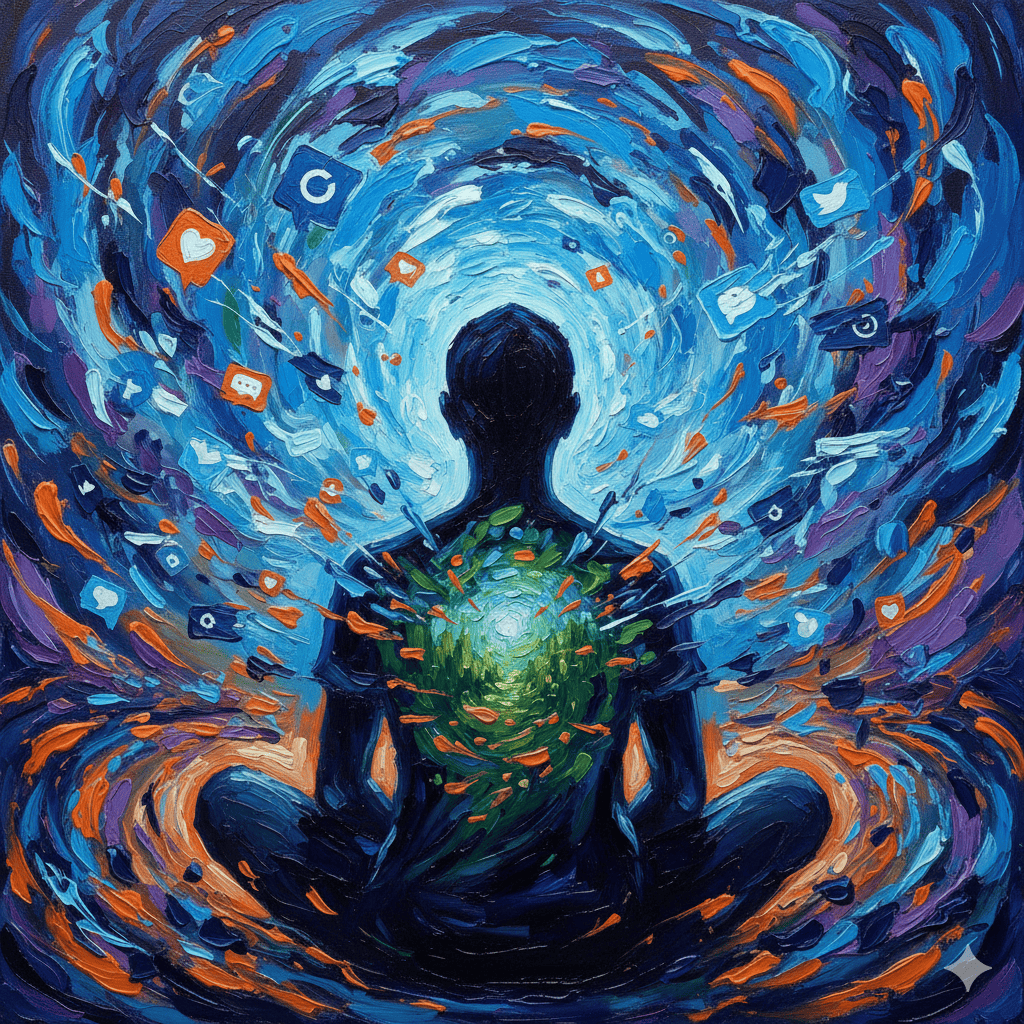
    • The Digital Reset

      The Digital Reset

      The Neurochemistry of Silence: How Time Offline Rewires the Human Brain

      The 2026 “Digital Exit” Report

      The modern brain is currently the subject of the largest unintended experiment in history. By 2026, the average adult spends over 11 hours a day interacting with digital screens. However, a landmark 2024 experiment conducted at The Stanway School in Colchester has provided a scientific blueprint for the “Great Unplug.”

      As documented in the Channel 4 series “Swiped: The School That Banned Smartphones,” researchers from the University of York challenged a group of Year 8 students to give up their devices for 21 days. The results were immediate and measurable:

      • Mental Health: Students reported a 17% reduction in depression and an 18% reduction in anxiety.
      • Sleep Hygiene: Participants fell asleep an average of 20 minutes faster and gained an additional hour of rest each night.
      • Biological Markers: Improved sleep coincided with positive changes in heart rate variability, a key signal of physical wellbeing.

      Source: University of York – School Smartphone Ban Results (Dec 2024)


      The Science of the “Reset”

      Why does this happen? According to a 2025 cohort study published by the National Institutes of Health (NIH), a one-week social media detox significantly reduces symptoms of insomnia and anxiety by breaking the “dopamine-cortisol” loop.

      When we “scroll,” we are feeding a biological dependency. The University of Sussex (2026) recently highlighted that “intrinsic motivation”—doing things for inherent satisfaction rather than external digital validation—is the primary driver of human joy. By removing the phone, you allow your dopamine receptors to reset to their natural baseline.


      Breaking the Spell: Real Stories of Recovery

      Case Study: Lauren VB and the ITAA

      For some, the “spell” of the digital world is a true clinical addiction. Lauren VB, a member of Internet and Technology Addicts Anonymous (ITAA), describes her former life as a “living nightmare” where compulsive tech use made choices for her. Through the ITAA 12-step program, she reclaimed her life by establishing “analog sanctuaries” in her home.

      Case Study: The “Dumbphone” Professionals

      In 2026, the “Light Phone” and “Minimalist Phone” movement has moved from niche to mainstream. Professionals in high-stress environments are swapping smartphones for devices with no browsers. Reports from The Guardian’s “Reclaim Your Brain” series highlight individuals who found their “focus returned like a muscle” after just 30 days of analog-only communication.


      The Analog Protocol: 120 Minutes of Wilderness

      To maximize the detox, you must replace the digital vacuum with what researchers call the “Nature Dose.” * The Rule:120 minutes per week in green space.

      • The Evidence: A report by Disrupt UK (2026) found that those who replaced screen time with active hobbies like hiking or model-making reported 20% higher happiness scores.
      • Further Resource: The National Trust – Paths to Wellbeing

      Safe External References for Your Site