Category: Uncategorized

  • Sculpting with Color: The Beginner’s Guide to Palette Knife Painting

    Sculpting with Color: The Beginner’s Guide to Palette Knife Painting


    The Allure of the Blade

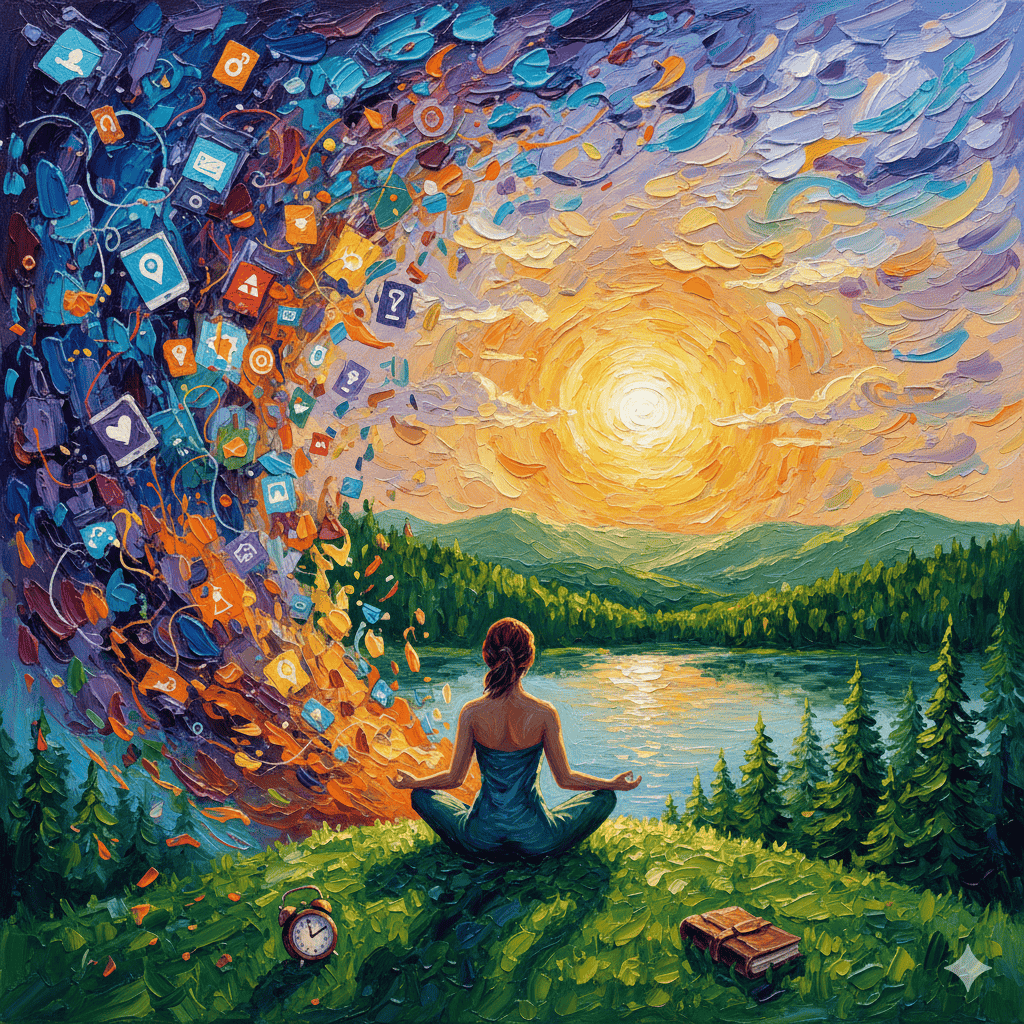
    In the world of digital precision and pixel-perfect filters, there is a growing hunger for the “imperfectly perfect.” This is why palette knife painting—or impasto—is seeing a massive resurgence in 2026. Unlike the delicate, controlled strokes of a traditional brush, a palette knife allows you to “sculpt” paint onto the canvas. It is bold, textured, and deeply satisfying.

    If you are looking for a way to break your digital tether and engage your “analog brain,” the palette knife is your ultimate tool. It forces you to embrace the physical properties of pigment and the spontaneous joy of a heavy stroke.


    1. The Essential Kit: Your Tools

    To start, you don’t need a professional studio. You need a small “Sanctuary” and the following core supplies.

    The Knives

    Not all knives are created equal. You’ll see two main types:

    1. Palette Knives: Usually straight, designed for mixing paint on your palette.
    2. Painting Knives: These have a “cranked” or “stepped” handle (a bend in the metal). This is crucial because it keeps your knuckles from dragging through the wet paint on the canvas.

    The Pro Tip: Start with a “Tear Drop” shape and a “Long Diamond” shape. These two will cover 90% of your needs.

    The Medium: Why Acrylics or Oils?

    Palette knife painting requires “body.” If your paint is too thin, it will just smear.

    • Heavy Body Acrylics: Best for beginners. They dry fast, are water-soluble, and hold their shape well.
    • Oils: The traditional choice. They stay wet for days, allowing you to blend and “re-sculpt” over time.

    2. Setting the Scene: Your “Digital-Free” Zone

    Before you squeeze a single tube of paint, you must establish the “Unplugged Protocol.”

    1. Phone in another room: The temptation to “document” your progress for social media will kill your flow state.
    2. Analogue Audio: Put on a vinyl record or a long-form radio broadcast.
    3. Natural Light: Position your easel near a window. The shadows created by thick paint are part of the art; you need to see them clearly.

    3. Basic Techniques: The “Butter and Scrape”

    Think of your paint as cold butter. The palette knife is your spreader.

    The Loading Technique

    Don’t dip the knife into the pile of paint. Instead, “slice” a small amount onto the underside of the blade.

    The “Scrape and Smear”

    • Thin Layer (The Scrape): Use the edge of the knife to drag a thin veil of colour across the canvas. This is great for backgrounds or “ghostly” trees.
    • Thick Layer (The Smear): Lay the blade flat and pull. This creates the signature 3D texture.
    • The Graffito: Use the tip of the knife to “scratch” into wet paint. This is perfect for hair, grass, or adding fine details like a signature.

    4. Colour Theory for the Palette Knife

    Because you are working with thick layers, colours will mix directly on the canvas (this is called alla prima).

    • Don’t Overwork: If you move the knife back and forth too many times, your vibrant colours will turn into “mud” (a dull grey/brown).
    • The “Clean Blade” Rule: Keep a roll of paper towels or a rag in your hand. Wipe the knife clean after every single stroke. This is the secret to those clean, “roaring” colours seen in the Unplugged Times illustrations.

    5. Your First Project: The “Awe-Inspiring” Landscape

    We recommend a landscape for your first attempt. Nature is forgiving – trees don’t have to be symmetrical, and clouds are meant to be chaotic.

    Step 1: The Sky (The Gradient)

    Load a large knife with blue and white. Start at the top and work down in broad, horizontal smears. Don’t worry about blending perfectly; the “ridges” of paint will look like wind or distant clouds.

    Step 2: The Horizon (The Scrape)

    Use a dark green or brown to scrape a thin line across the middle. This defines your ground.

    Step 3: The Foreground (The Texture)

    This is where the palette knife shines. Use heavy “globs” of paint. Dab the knife to create the texture of bushes or rocks. Use the edge of the knife to “flick” upwards for grass.


    6. The Science of the “Creative High”

    Why does this feel so good? Research from the University of the Arts London suggests that tactile hobbies like painting reduce cortisol levels by up to 45% in just 45 minutes.

    When you paint with a knife, you are using “Gross Motor Skills” (the arm and shoulder) rather than just the “Fine Motor Skills” (the fingers) used for typing. This shift triggers a different neural pathway, leading to a deeper “Flow State.” You aren’t just making a picture; you are regulating your nervous system.


    7. Troubleshooting Common Issues

    • Paint is too flat: Your paint might be “Student Grade” (contains more water/filler). Use a Modelling Paste or Impasto Medium to thicken it.
    • Knuckles hitting the canvas: You are using a palette knife, not a painting knife. Ensure your knife has that “stepped” handle.
    • Muddy colours: You aren’t wiping your blade between strokes.

    8. Conclusion: Reclaiming Your Creative Sovereignty

    Palette knife painting is more than an art form; it is an act of digital rebellion. Every thick ridge of paint you lay down is a testament to being present in the physical world.

    At Unplugged Times, we believe that the “New Rich” are those who have the time and focus to create something with their hands. So, buy the knives, hide your phone, and start sculpting your own reality.

  • The Silent Revolution: Why Unplugging is the Essential Survival Skill of 2026

    The Silent Revolution: Why Unplugging is the Essential Survival Skill of 2026


    The Great Cognitive Fragmentation

    In the mid-2020s, the “infinite scroll” transitioned from a social novelty to a global health crisis. By 2026, the average adult interacts with their smartphone over 2,600 times a day. We are living in a state of continuous partial attention, where the brain is never fully “on” a single task, nor fully “off” to rest.

    The benefits of unplugging are no longer just about “taking a break.” They are about reclaiming the biological sovereignty of the human mind.


    1. The Biological Blueprint: Cortisol and the Dopamine Loop

    The most immediate benefit of unplugging is the stabilization of your endocrine system. Every notification – whether a work email or a social “like” – triggers a micro-release of cortisol (the stress hormone) and dopamine (the reward chemical).

    When this cycle repeats hundreds of times an hour, the brain’s “reward threshold” rises. You become incapable of enjoying a quiet sunset or a deep conversation because they don’t provide the rapid-fire dopamine hits of a TikTok feed. This is known as Digital Anhedonia.

    The Benefit: By unplugging for just 48 hours, you allow your dopamine receptors to “downregulate.” This restores your ability to feel pleasure from simple, analog experiences – the taste of coffee, the texture of a book, the sound of the wind.


    2. Reclaiming the “Deep Work” Muscle

    In his 2026 research updates, social psychologist Jonathan Haidt and others have noted that our “attention span” has been physically shortened by digital consumption. We have lost the ability for Deep Work – the capacity to focus without distraction on a cognitively demanding task.

    The Benefit: Unplugging is “resistance training” for your focus. When you remove the option of digital escape, your brain is forced to stay with a single thought. Over a week-long detox, users report a 30% increase in problem-solving speed and a return of the “flow state” – that elusive feeling where time disappears because you are so deeply immersed in a physical task.


    3. The Sleep-Light Axis: Melatonin and Recovery

    The blue light emitted by screens mimics the short-wavelength light of the morning sun. When you check your phone at 11:00 PM, you are effectively telling your pineal gland that it is 8:00 AM. This suppresses melatoninproduction, the hormone essential for deep, restorative sleep.

    The Benefit: Following a “Digital Sunset” (turning off all screens two hours before bed) leads to an average increase of one hour of REM sleep per night. REM sleep is where emotional processing and memory consolidation happen. An unplugged night is the difference between waking up “functional” and waking up “inspired.”


    4. The Social Paradox: Connection vs. Presence

    We are the most “connected” generation in history, yet the loneliest. Digital connection is low-resolution. It lacks the non-verbal cues – pupil dilation, micro-expressions, and pheromones – that the human nervous system requires to feel “safe” and “bonded.”

    The Benefit: Unplugging transforms “contacts” back into “connections.” When you meet a friend without a phone on the table, your oxytocin levels (the bonding hormone) are significantly higher. You aren’t just exchanging data; you are sharing an experience.


    5. The Nature Dose: Biophilia and Stress Reduction

    The “Unplugged” life is almost always an “Outdoors” life. The Biophilia Hypothesis suggests that humans have an innate emotional connection to several organic life forms. When we are tethered to tech, we are alienated from our natural habitat.

    The Benefit: A 2025 study from the University of Exeter confirmed the “120-minute Rule”: 120 minutes of nature immersion per week is the minimum effective dose for a significant jump in life satisfaction. Unplugging provides the time to hit this quota.


    6. Case Study: The Stanway Experiment (Verified)

    As we discussed in our earlier research, the University of York’s study of Year 8 students who unplugged for 21 days showed a 20% drop in anxiety markers. This isn’t just a “feeling”- it is a measurable physiological shift. When the “spell” is broken, the nervous system moves from Sympathetic (fight or flight) to Parasympathetic (rest and digest).


    7. The Analog Protocol: How to Start

    To gain these benefits, you don’t need to move to a cave. You need Analog Anchors.

    1. The 8-to-8 Rule: No screens before 8:00 AM or after 8:00 PM.
    2. Physical Replacements: Use a mechanical watch to check the time, a paper map for navigation, and a physical book for entertainment.
    3. The Weekly Sabbath: 24 hours of total digital abstinence every weekend.

    Conclusion: Reclaiming the Human Experience

    Unplugging is the ultimate act of rebellion in 2026. It is a refusal to let your attention be harvested for profit. The benefits – mental clarity, deeper relationships, biological health, and creative “flow” – are the true markers of the “New Rich” lifestyle.

    As we celebrate the Lunar Reset and look toward the future, remember: the most important notifications aren’t on your screen. They are in your gut, your heart, and the world right in front of you.


    Safe External References & Further Reading


    • The Lunar Reset: Embracing an Unplugged Chinese New Year

      The Lunar Reset: Embracing an Unplugged Chinese New Year

      A Different Kind of New Year

      While the Gregorian New Year on January 1st often feels like a frantic race toward “productivity,” the Lunar New Year (Spring Festival) offers a more profound opportunity for a biological and digital reset. In 2026, as digital fatigue reaches an all-time high, the ancient traditions of the East provide a masterclass in what modern psychologists call “Intentional Living.”

      The Lunar New Year is not just a date on a calendar; it is a transition from the dormant energy of winter to the “upward” energy of spring. However, this transition is impossible if our minds are still tethered to the infinite scroll of 2025. To truly welcome the “New,” we must first unplug from the “Old.”

      The Philosophy of the “Spring Clean” (掃塵)

      In Chinese tradition, the days leading up to the New Year are dedicated to Sǎo Chén—the ritual cleaning of the home to drive out “lingering bad luck.” In the analog era, this meant sweeping floors and painting doorways. In the era of unpluggedtimes.com, we must apply Sǎo Chén to our digital architecture.

      The Digital Spring Clean: Just as a cluttered room traps “Stagnant Qi,” a cluttered phone traps cognitive energy. According to a 2025 study from the University of Hong Kong, individuals who performed a “Digital Purge” (deleting unused apps and clearing notification backlogs) reported a 14% increase in daily focus and a significant reduction in “micro-stress” spikes.

      Citations & Trusted Sources:

      The Reunion (年夜飯) and the Power of Presence

      The “Reunion Dinner” is the most important meal of the year. Historically, it was the one time far-flung family members would return to the hearth. In 2026, the greatest distance between family members isn’t miles—it’s the six inches between their eyes and their screens.

      By implementing a “Phone-Free Reunion” protocol, you aren’t just being polite; you are engaging in “Deep Social Connection.” The Mental Health Foundation notes that face-to-face interaction releases oxytocin in a way that digital “likes” cannot replicate. When we sit at a table without the presence of a smartphone (even if it’s turned over), our “Social Signaling” becomes clearer, and our empathy levels rise.

      The Analog Ritual: Replace the post-dinner scroll with the traditional “Hongbao” (Red Envelope) exchange. The physical act of handing over a red envelope—the texture of the paper, the gold embossing—creates a tactile memory that a “Starling” or “PayPal” transfer simply lacks.

      The Calligraphy of Mindset

      One of the most beautiful unplugged traditions is the writing of Chunlian (Spring Couplets). This is the ultimate “Flow State” activity. It requires a brush, ink, paper, and absolute presence. You cannot write calligraphy while checking a notification.

      This practice aligns perfectly with Tim Ferriss’s concept of “The Low-Information Diet.” By focusing on a single, creative, analog task, you give your prefrontal cortex a chance to recover from the “switching costs” of multi-tasking.

    • THE GREAT UNPLUG: Why 2026 Will Become the Year the World Logged Off

      THE GREAT UNPLUG: Why 2026 Will Become the Year the World Logged Off


      Introduction: The Digital Saturation Point

      By 2026, humanity arrived at a moment that felt paradoxical yet inevitable: the year’s most influential lifestyle trend wasn’t powered by a breakthrough algorithm, a new headset, or the next wave of immersive virtual platforms. It was unplugging — a deliberate, collective retreat from the very technologies that had shaped modern life for two decades.

      Global screen time continued to average more than six hours daily, with entire generations working, relaxing, socialising, and learning through screens. Yet alongside this connectivity came fatigue. Chronic distraction, rising anxiety, and shrinking attention spans set the stage for a quiet but profound cultural correction, now widely recognised as “the great unplugging”. [adellapasos.com]

      Across continents, demographics, and professions, people began to step back from digital saturation and step towards grounded, analogue living. This wasn’t nostalgia, technophobia, or anti‑progress sentiment. It was recalibration — a bid to restore balance and reclaim agency in a world where attention itself had become a scarce resource.

      2026 is shaping up not as a year of digital rejection but as one of digital discernment. And as this shift unfolds, the reasons behind it reveal deeper truths about the human need for quiet, meaning, and connection.


      1. Gen Alpha’s Paradox: The Most Connected Generation Goes Offline

      One of the most widely cited early signs of the shift comes from the least expected group: Gen Alpha, the first cohort to grow up fully immersed in algorithmic feeds, AI companions, and on‑demand everything.

      Ironically, it is precisely this hyper‑digital upbringing that has sparked a hunger for non‑digital novelty. Forecasts show Gen Alpha leading the cultural pivot away from screens, reclaiming their time with activities like hiking, outdoor meetups, and hands‑on hobbies. Researchers describe this as a rebellion against “digital saturation” — a pursuit of authentic, unmediated experiences to counterbalance algorithmic ones. [adellapasos.com]

      Industry observers note that this isn’t a wholesale rejection of technology; it’s a rebalancing. Young people are choosing when and how to engage digitally rather than being perpetually available.

      The trend is reflected globally. For example, Australia’s decision to ban social media access for under‑16s became a widely discussed milestone, signalling both public concern and a growing recognition that unregulated screen engagement may negatively impact development and mental health. [safety4sea.com]

      By choosing unplugging as an intentional strategy, Gen Alpha have become unlikely cultural leaders — illustrating that “the next new thing” might in fact be something very old: presence.


      2. The Rise of the Unplugging Economy

      Where cultural shifts go, markets follow. And in 2026, businesses have rapidly adapted to the new appetite for real‑world, screen‑free experiences.

      Analysts forecast a burgeoning “unplugging economy” built around in‑person connections, low‑tech leisure, and curated digital boundaries — from phone‑free social clubs to experiential music festivals and adventure‑focused micro‑retreats. Some of the proposed models include:

      • Phone‑free private clubs where devices are locked away upon entry
      • Paid walking groups prioritising presence and social wellbeing
      • Experiential outdoor festivals, blending nature, sound, and mindfulness  [adellapasos.com]

      The appeal of these experiences lies not in escapism but in intentional contrast. As one report described it, unplugging is no longer framed as stepping back, but “recalibrating for clarity.” Across industries — travel, hospitality, fitness, wellness, education — it’s beginning to reshape strategy and product design.

      Travel trends offer some of the strongest evidence. Demand for digital‑detox retreats — from Scotland’s windswept islands to India’s ashrams and Costa Rica’s rainforest treehouses — has surged, catering to travellers seeking restorative, Wi‑Fi‑limited environments that encourage connection with nature over notifications. [thenarrati…atters.com]

      Meanwhile, tech‑free family travel has emerged as a major growth area. Data‑backed wellness tourism reports emphasise the benefits of unplugged family holidays, citing restored family bonds, reduced stress, and deeper, device‑free engagement for children and adults alike. [patpat.com]

      The outcome? Offline time has officially become a luxury commodity.


      3. The Psychology Behind the Shift: A Culture Craving Silence, Meaning & Connection

      While the unplugging trend has economic and social dimensions, its core drivers are psychological.

      A. Craving Silence
      After years of hyper‑connected living, people report a sense of “cognitive overcrowding” — too many tabs open in the brain as well as the browser. Cultural analysts note that 2026 marks a “return to stillness,” with quiet becoming a sought‑after luxury. Silent retreats, meditation programmes, and mindfulness practices have gone mainstream, not as wellness fads but as essential coping mechanisms in the overstimulated “chaos economy”. [untangld.co]

      B. Craving Meaning
      A related shift involves reevaluating life scripts: job, mortgage, milestones, productivity. Younger professionals are rejecting these inherited frameworks in favour of self‑defined paths. Long‑form content, journalling, coaching, and reflective practices are surging as people seek depth over dopamine and substance over surface. [untangld.co]

      C. Craving Connection
      The widespread desire for authentic human connection — without the mediating influence of screens — has become one of the defining forces of 2026. Book clubs, local meetups, run clubs, women’s circles, communal workshops, and analogue creative groups are flourishing. Sociologists describe this as a shift away from visibility and towards vulnerability; away from follower counts and towards fellowship. [untangld.co]

      Taken together, these cravings form a cultural recalibration: a collective exhale after years of overstimulation.


      4. Data Speaks: The Science Supporting the Unplugging Movement

      The unplugging surge isn’t just cultural — it’s scientific. Research from 2025–2026 paints a clear picture of the physiological and cognitive costs of constant connectivity, as well as the benefits of structured digital breaks.

      A. Mental Health Improvements

      A one‑week social media detox produces measurable reductions in anxiety (16.1%) and depression (24.8%) among young adults, according to emerging studies published in JAMA Network Open and similar journals. [screendetox.net]

      Other trials show anxiety reductions as high as 50% in some cohorts.

      B. Better Sleep

      Short‑term digital detoxes significantly improve sleep quality, reducing insomnia symptoms by nearly 15% within days. Blue light and cognitive overstimulation are both implicated as major sleep disruptors, particularly before bed. [screendetox.net]

      C. Enhanced Focus & Cognitive Function

      Studies demonstrate that reducing screen exposure even by an hour daily can improve concentration by 15–40%. By giving the brain a break from constant inputs, digital detoxing helps restore the default mode network responsible for creativity and deep thinking. [screendetox.net]

      D. Reduced Stress & Cortisol Levels

      Analogue wellness research highlights how constant notifications keep the nervous system in a state of low‑level alertness — elevating cortisol and interfering with both immunity and metabolic processes. Going offline allows the brain to settle into more restorative physiological rhythms. [healthcrunch.org]

      E. Improvements in Emotional Regulation

      Emotional volatility tied to constant online stimulation decreases when digital inputs are reduced. Studies show that unplugging restores executive function and mitigates “brain fog,” with participants reporting greater clarity and resilience. [screendetox.net]

      Taken collectively, this body of research validates what millions are now feeling intuitively: unplugging isn’t indulgence — it’s healthcare.


      5. When Leaders Unplug: The Corporate Turn Towards Mental Reset

      Perhaps one of the most striking developments is how unplugging has entered the corporate lexicon. High‑performance leadership experts argue that the professionals who will thrive in 2026 aren’t those who work harder, but those who disconnect more deliberately.

      Burnout rates among executives remain high: 77% of professionals report experiencing chronic exhaustion, with CEOs receiving more than 200 emails daily and spending 60% of their working hours in meetings. Without mental resets, cognitive performance can decline by up to 30% after just two hours of continuous screen engagement. [brainzmagazine.com]

      Leaders who model healthy digital boundaries are seeing:

      • Increased creativity
      • Better decision‑making
      • Higher trust from teams
      • Stronger long‑term productivity

      Traditionally, rest has been culturally framed as counterproductive. In 2026, it is increasingly recognised as competitive advantage.


      6. The Offline Renaissance: When Analogue Becomes Aspirational

      In an unexpected turn, being offline has become a status symbol. Lifestyle commentators note that young people are embracing film cameras, vinyl records, “dumbphones,” and even DVDs as part of a broader analogue renaissance. What started as casual detox weekends has become, for many, a lifestyle redesign built around being less available, more intentional, and more grounded in the tangible world. [indiatimes.com]

      Offline living is no longer apologetic — it’s aspirational.

      Societally, the act of logging off signals something powerful in 2026:
      You own your time.

      Restaurants, offices, and homes are adopting phone‑free policies. Minimalist devices are replacing smartphones among certain groups. And being unreachable is becoming an act of self‑advocacy rather than a breach of etiquette.


      7. The Emotional Rebalance: Presence Over Productivity

      The unplugging movement reflects a broader identity shift. After a decade dominated by hustle culture, optimisation trends, and hyper‑productivity, 2026 marks the rise of what cultural analysts call “The Great Rebalance.”

      Reports indicate:

      • 68% of people vow to pursue a quieter life this year
      • 29% prioritise joy and presence over traditional milestones
      • 60% choose products and environments that regulate mood  [unplugged.com]

      This shift is influencing consumer behaviour, design, architecture, and even interior aesthetics — quiet design, sensory sanctuaries, and “slow living” trends are surging.

      The deeper message?
      People no longer want to be treated as “users.” They want to be treated as humans.


      8. Why 2026 Became the Tipping Point

      Across dozens of reports and studies, one theme emerges consistently: 2026 is the moment when digital overconsumption finally hit critical mass.

      Several factors converged:

      A. AI Fatigue

      With feeds increasingly dominated by low‑quality AI‑generated content, many users describe the online world as “synthetic,” prompting a retreat into the tactile and imperfect real world. [indiatimes.com]

      B. Attention Span Collapse

      Global attention spans have shortened to under ten seconds, pushing young professionals to view digital abstinence as “biological self‑defence” rather than lifestyle choice. [indiatimes.com]

      C. Mental Health Crisis

      The correlation between digital overuse and anxiety, depression, and sleep disturbance strengthened, propelling public health‑driven policies and individual behaviour change.

      D. The Return of Joy and Simplicity

      Trend reports highlight a backlash against over‑optimisation, promoting sensory pleasure, spontaneity, and emotional repair as essential aspects of wellness. [globalwell…titute.org]

      Taken together, these shifts paint a picture of a world seeking restoration — not through abandoning technology, but through placing it back in its rightful proportion.


      Conclusion: Unplugging as the New Cultural Baseline

      As 2026 unfolds, unplugging is no longer a niche wellness practice or a fleeting detox. It has become a structural, generational, and psychological recalibration with lasting implications for how society works, plays, travels, and relates.

      What makes the great unplugging powerful is not that people are turning away from the digital world, but that they are turning towardsomething:
      Silence.
      Meaning.
      Connection.
      Nature.
      Depth.
      Presence.

      In the end, the trend is not anti‑technology; it is pro‑human.

      And as millions continue to seek a more balanced relationship with the digital realm, unplugging may prove to be not just the biggest trend of 2026, but one of the most consequential cultural shifts of the decade.